

Two-pin plugs
When we order electrical goods online, we assume that they’ll come ready to use with a three-pin plug. But with many electrical goods coming from outside the EU, it’s important to think ‘safety first’ before using them.
When you buy an item designed for use in Ireland or targeted at Irish consumers, it generally should not come with a two-pin plug attached. But if you do receive an item with a two-pin plug, there are several things you can do to stay safe.
What must I avoid if I have an electrical item with a two-pin plug?
If an electrical item comes with a two-pin plug, you might be tempted to work around the issue. But it is important not to use a travel adaptor or rewire to a three-pin plug. Doing so can expose you and your household to serious risks of:
- electric shock
- overheating
- fire.
Why it is dangerous to use a travel adaptor
In Ireland, our domestic electricity supply has a standard strength of electrical current, known as voltage. An electrical item with a two-pin plug might need a different voltage to work properly.
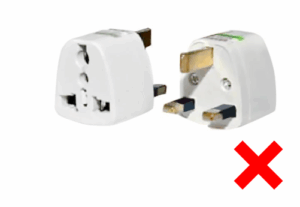
A travel adaptor is not designed to permanently replace a proper plug. Ongoing use can be dangerous because a travel adaptor:
- does not adjust voltages between sockets and electrical items to make the items safe to use
- may lack the safety features, such as protective earthing, that prevent electric shock
- is suitable only for short-term use with devices that do not consume much electricity.
Why it is dangerous to rewire to a three-pin plug
Rewiring an electrical item to a three-pin plug can be dangerous if, for example:
- you rewire the plug incorrectly
- the rewiring bypasses the plug’s built-in safety features
- you don’t tighten the plug’s clamp or cover securely after wiring.
What should I do if I receive a product with a two-pin plug?
Report the item to the CCPC
If you receive any product without a suitable three-pin plug, report it to us at the CCPC.
EU law sets mandatory safety standards for all mains-powered electrical goods within a certain voltage for sale to consumers. In addition, manufacturers, retailers, importers and distributors must make sure that electrical products are safe to use before they put them on the market. This includes making sure the products are compatible with the wiring and domestic supply system in Ireland and comply with other relevant product safety laws.
Contact (01) 402 5555 or email ask@ccpc.ie to report an unsafe item.
Return the item to the retailer
As a consumer, you might decide to return an electrical item if you cannot use it. Your consumer rights apply if you have bought a faulty item within Ireland or from a retailer based elsewhere in the EU or in the UK. If you have bought an item from outside the UK or EU, check the terms and conditions of your purchase and the retailer’s returns policy.
Must all mains-powered electrical devices have a three-pin plug?
No, there are limited situations where electrical goods in Ireland may come with a compliant two-pin plug. For example, a two-pin plug is acceptable if it is:
- attached to a low voltage device designed for use in a two-pin socket
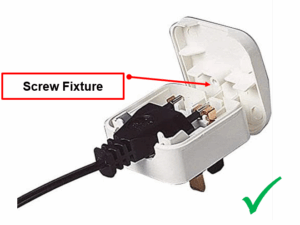
- fully enclosed in a suitable three-pin conversion plug.
Low voltage device
You may have an electric shaver or toothbrush at home that runs on a two-pin plug. Any two-pin socket for these devices is designed to handle a lower voltage of electricity safely.
Three-pin conversion plug
A three-pin conversion plug or transformer balances the voltage between the electrical item and your wall socket, making the item safer to use.
To ensure safety, the conversion plug must have a certification such as the CE Mark and fully enclose the two-pin plug (see images below). The two-pin plug inside the converter should only be accessible with the help of a tool, for example a screwdriver.
| SUITABLE – CONVERSION PLUG | NOT SUITABLE – STANDARD TRAVEL ADAPTOR |
|
 |
You can find other exemptions from three-pin plug requirements in the National Standards Authority Of Ireland (Section 28) (13 a Plugs & Conversion Adaptors For Domestic Use) Regulations, 1997 (SI 525/1997).
How can I make sure I get a three-pin plug if I order an electrical item online?
- Carefully review the item’s description and specifications (details) on the retailer’s website, including things like the plug type and the item’s voltage.
- Take a close look at any photos of the plug attached to the item to check that it is suitable for Ireland.
- If you are still in doubt, ask if the product comes with a Type G 13 Amp three-pin plug that meets the Irish IS 401:1997 standard or the UK BS 1363 standard. Contact the retailer if buying directly from them or submit a question within the product listing if ordering through an online marketplace.
